Baseball in Los Angeles started with the Dodgers. Nope. Not even close.
With the baseball season now underway and the Dodgers defending their title, this is a great time to cover some Los Angeles baseball history. Did you know there was baseball in Los Angeles long before the Dodgers came to town? In fact, baseball thrived on the west coast before the Dodgers and Giants traveled west.
[Note: Some links in this post are affiliate links. If you buy something, I may earn a small commission—at no extra cost to you.]
Before the Dodgers
Before the Dodgers, the landscape of the city was much different. Trolley tracks and cables ran all through the city to keep the Red Car moving. Elysian Park was largely made up of Mexican-Americans striving for their version of the American Dream. And the Angels played baseball in downtown Los Angeles as part of the Pacific Coast League (PCL).
The League Out West
The official start of the PCL is listed as 1903. This is when a small league decided it was time to expand its reach and pull some teams from other leagues to form something that actually represented the west coast of the country.
Before 1903, baseball out west consisted primarily of the Pacific Northwest League (PNL) and the California League, which only operated in northern California. There were a few others like the Montana State League and the California State League that operated with varying degrees of success.

The California League earned its name in 1900 when it brought in the Los Angeles Looloos, owned by Jim Morley, to play along with teams in Oakland, San Francisco, and Sacramento. In 1902, the California League looked to move beyond California and poach teams from the rival PNL.
The California League successfully depleted the PNL and became a six-team league that now represented each state along the Pacific Ocean. After a few franchise name changes, the six teams to play in 1903 were the Seattle Siwashes, Portland Browns, Sacramento Senators, Oakland Oaks, San Francisco Seals, and Los Angeles Angels. And with that, the PCL was born.
Baseball has always been a grind. Today, the season consists of 162 games with rest days coming mostly to travel from one city to the next. But with the west coast climate perfectly suited to baseball, PCL seasons hit the 200-game mark often. In 1905, the Seals played 230 games in one season!
Players loved the longer schedule because a shorter off-season meant they had fewer months when they needed to find jobs to make ends meet. Fans loved it because they had baseball to enjoy for a large part of the year.

Three Los Angeles Teams
Baseball in the 1800s and early 1900s was volatile. Small leagues faced struggles, as did the teams. Leagues would come and go. Teams would move around, dissolve, leave a league and come back years later. The PCL was no exception but one thing about its evolution is that it benefited Los Angeles in the long run. In the decades of the PCL until the majors moved west, Los Angeles had a total of three teams.
Los Angeles Angels
The PCL had many teams move around but the San Francisco Seals and Los Angeles Angels were entrenched. So much so that you can’t talk about the other two L.A. teams without first talking about the Angels.
Originally owned by Jim Morley, they were the Looloos in the 1800s before the PCL was formed. In 1903, they were brought into the PCL and adopted the Angels as their new name.
As it’s always been the case in the city of Angels, you can’t last as a team unless you win—and the Angels of the PCL did. They won 15 PCL championships including the first official championship of the league in 1903. Their 15th came in 1956, two years before the MLB came west.
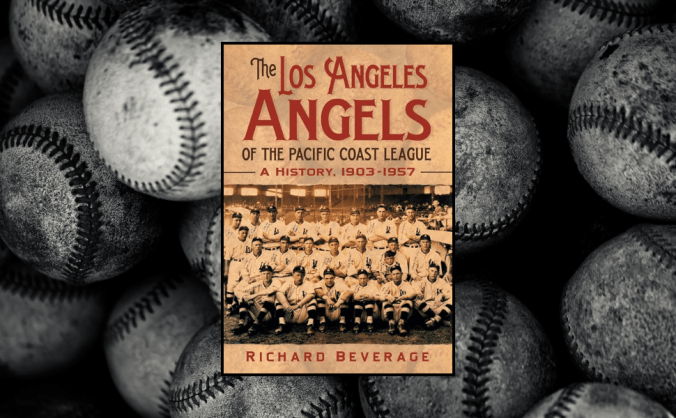
In 1934, the Angels dominated the league. At that time, the PCL divided the season into two halves. The team with the best winning record in each half would meet in a playoff series at the end of the season.
The Angels won both halves decidedly: 66 wins in the first half, 71 in the second. Overall, the Angels finished the year with 137 wins and 50 losses. They hold the best winning percentage in a season at 73%.
With no playoff because of their domination, the league scheduled a series that pinned the Angels against a PCL all-star team. A young man by the name of Joe DiMaggio had captured all the attention at the league but hurt his knee in 1934 and was unable to play for the all-star team.
Even the all-stars were no match for the impressive team the Angels put together, losing the series in six games. Having also won the pennant the previous year, the 1934 Angels are considered the best team in the history of the PCL.
Despite the success and history of the Angels, it wasn’t them that originally drew me into the story of the PCL years ago. It was their stadium.
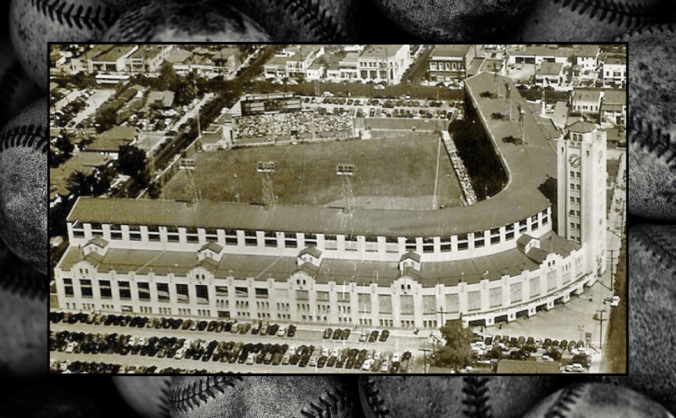
The Original Wrigley Field
In August 1921, William Wrigley purchased the Angels for $150,000. Wrigley was already well established on the California power scene at this point. He owned the Wrigley company and the Chicago Cubs but he was also the owner of Catalina Island (I can’t help but think of Noah Cross of the film Chinatown here).
Wrigley’s entry into the PCL signaled a major turn for the league. For starters, he wielded his money and power to shift the league meetings from northern California to Catalina Island. He then vowed to build the Angels a stadium that would be the envy of major league teams.
“Recognizing that ballparks in the Pacific Coast League were generally thrown up in a few weeks by nailing some boards together and securing the structure with wire mesh, Wrigley wanted to initiate a new era in the PCL.”
— Dennis Snelling
To do this, he hired architect Zachary Taylor Davis to build the new stadium. Davis worked with Wrigley to build then named Cubs Park in Chicago.
On September 29, 1925, Wrigley Field held its first game. Appropriately, the Angels beat the San Francisco Seals 10-8.
According to Snelling, newspapers of the day said the following about Wrigley Field: “Here is the finest and most modern ball park in the United States. In structural beauty it is not exceeded by the Polo Grounds or the Yankee Stadium in New York City.”
The 20,000-person stadium featured a clock tower at the home field corner along with a left field wall you could visualize covered in ivy like in Chicago—it later did get ivy. Right-center field featured a seating area similar to the pavilion seats of Dodger Stadium.
Much like in Chicago, the outfield stopped at the end of the block. Located on the corner of San Pedro and 42nd Place in South Los Angeles, the outfield was directly across the street from single family homes. If there were as many home runs as we see today, those houses needed additional protection from stray home run balls.
Unlike popular belief, Wrigley Field L.A. and Wrigley Field Chicago were not identical. Davis was asked to use Spanish elements to better match Los Angeles architecture. And if we’re talking names, the Los Angeles stadium is the original Wrigley Field. Cubs Park was renamed Wrigley Field in 1926, one year after Wrigley Field Los Angeles opened.

Vernon Tigers
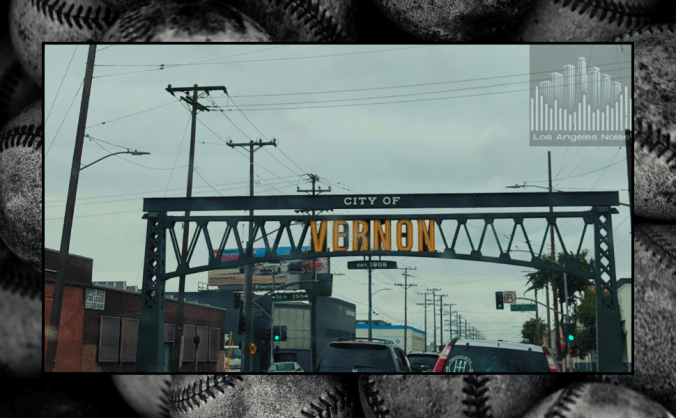
In 1909, the league expanded and the Vernon Tigers began. Yes, that Vernon. The small neighborhood in Los Angeles has a richer history than you may think but this decision was more about booze than history.
At the time, Vernon was one of the few neighborhoods in Los Angeles where public drinking and gambling were legal. This was the leading reason for a team in Vernon. Dennis Snelling states it in his book, The Greatest Minor League:
“Not coincidentally, it [Vernon] was also one of the few areas in Los Angeles County where liquor could be openly sold on Sundays. The franchise was awarded to brewery owner Fred Maier for the token sum of one dollar. He announced that the field at Vernon, which was used by amateur players, would be enlarged and improved for league play.”
This Vernon Park was really only used on Sundays to take advantage of the lax drinking laws. The rest of the time, the Tigers played at Washington Park along with the Angels. In 1912, the Tigers moved to Venice, another public-drinking-friendly city. Their stadium situation was similar, playing at Washington Park for the week and Venice Park on Sundays.
The Tigers would switch up between Venice and Vernon but settled as the Vernon Tigers by 1916. Pennants escaped them for the majority of their existence in Los Angeles until 1919.
The Tigers and Angels both had great teams in 1919 and were tied up most of the year as they got closer to the final series of the season, where the two teams would meet. The southern California faithful hoped it would come down to this series to determine the winner of the season.
Before meeting the Angels, the Tigers had to play a series against the Salt Lake City Bees. The Tigers came to this series in a slump that looked like it could cost them the pennant — unless they turned things around against the Bees.
And turn things around they did. Despite losing the first game, the Tigers won the series against the Bees and started the final seven-game series against the Angels only two games behind them. This series would decide the pennant. The Tigers won five of six and took the PCL pennant, but the triumph was short-lived.
The Fix Was In
One year later, an investigation into gambling in baseball discovered more than one Salt Lake City player had been bribed to throw the game against Vernon. One well-known gambler with mob ties was caught boasting it had cost him $10,000 to bribe the Bees but had made him $50,000 as a result.
And it wasn’t just outside gamblers fixing games. The Tigers created a cash fund they used to bribe opposing players throughout the season and it was reported that the entire team knew about the fund’s existence even if they weren’t contributing to it.
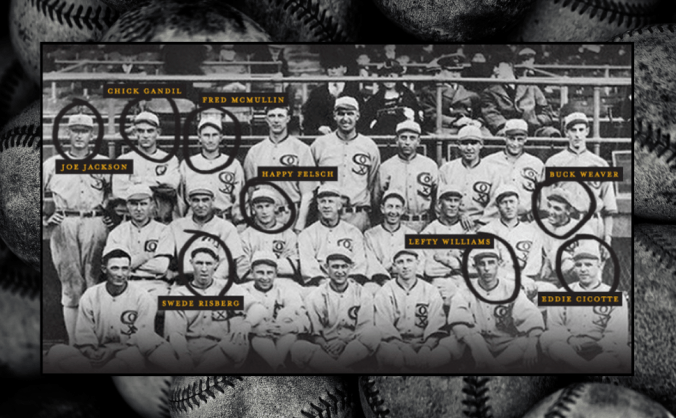
The case went much higher than the PCL and connected to the most infamous gambling scandal in baseball: the Chicago Black Sox of 1919. That year, the White Sox went into the World Series a 3-1 favorite against the Cincinnati Reds.
Eight White Sox players were accused of taking bribes from the mob to throw the series, which they lost in eight games. Despite the trial ending in not guilty verdicts, the league felt it had enough information to ban all eight players for life. Five of the eight players had previously played in the PCL, including Lefty Williams who had been on the Salt Lake City Bees.
The team’s reputation was tarnished and never really recovered. Once Wrigley purchased the Angels, he was set on not sharing Los Angeles with the Tigers. When construction began on the new stadium, Wrigley made it clear the Tigers could not play in it.
The Tigers rotated between Vernon and Venice, but were based in Los Angeles for 16 years. It was Wrigley who worked out the deal for a new owner, who promptly moved them to San Francisco. Snelling calls the new team the San Francisco Missions but Baseball Reference refers to them as the Mission Bells. In either case, they were now in the San Francisco area and the story of the Vernon Tigers had come to an end.
Hollywood Stars
The Stars, Part 1
Wrigley stated he wanted Los Angeles to belong exclusively to the Angels. And yet, immediately after pushing the Tigers out, he encouraged the owner of the Salt Lake City Bees to bring them here, even extending the use of Wrigley Field when they did.
For years, owners around the PCL complained about the expenses of traveling to Utah to play against the Bees. The team also faced low attendance and support by the 1920s, especially after they became the team synonymous with game fixes.

Moving the franchise to Los Angeles with the full support of the richest person in the league was difficult to pass up. And that’s how even after losing the Tigers, Angelenos still had a choice of teams. You could root for the Angels or you could root for the new Hollywood Stars.
The pennant never went to Salt Lake City and the Tigers’ 1919 and 1920 wins were marred by gambling scandals. The Stars would find success in L.A. much quicker.
In 1929, Hollywood won the second half of the season to set up a playoff against the winners of the first half of the season: the Mission Bells. Not only was this a rematch of the 1919 series but the Stars won their first PCL championship by defeating the Los Angeles team they replaced.
The following year, the Stars found themselves again in a playoff for the pennant. This time it was against their hometown rival and stadium landlord Angels. Again, the Stars came out on top.
Despite their early success, the Angels had a hold on the majority of Los Angeles baseball fans. On top of that, Stars owner William Lane had to pay $8,000 a year to use Wrigley Field. In 1935, the Depression was hurting overall attendance numbers and the Stars were in last place, which further dropped attendance for their games.

With everything going against him at the time, Lane felt he had no choice but to move the team. Without much more room to go west, the team went south. Their new home: San Diego. Their new moniker: The Padres.
The Stars, Part 2
It’s only fitting that the story of a baseball team representing Hollywood would get a sequel. Just three years after the Stars left for San Diego, an old friend decided Hollywood was a worthwhile market.
For 11 years, the Mission Bells—and former Vernon Tigers—played second option to the San Francisco Seals. And the Seals got even more notoriety when they brought on a teenager by the name of Joe DiMaggio, who would immediately make an impact on the team.
Bells owner Herbert Fleishhacker felt it was time to relocate the team once more. With Hollywood vacated and Los Angeles growing, Fleishhacker packed up and brought his team just miles from where the franchise was born. The Bells were now the Hollywood Stars.
The Stars sequel found more success than the original in attendance, market share, and pennants. The PCL did away with the first- and second-half champions, crowning the winner of the full season as the pennant winner. And Hollywood took that honor in 1949, and back-to-back in ‘52 and ‘53.

The most immediate change this time around was that while the Stars played their first season’s games at Wrigley Field, they were building a brand new stadium of their own. This Stars team would not be the Angels’ tenant.
In 1939, the Stars moved into the brand new Gilmore Field on the corner of Fairfax and Beverly. While not as big as Wrigley—it only sat 13,000—it was their own. The two teams were now crosstown rivals.
Star Studded
Much like Lakers and Dodgers games today, celebrities came out to see Stars home games. In fact, they did more than watch—they were part owners. A few years after moving, Fleishhacker was forced to sell the team to Robert Cobb (owner of the Brown Derby).
Cobb, in turn, offered a piece of the team to celebrities to garner interest in the team. They included Bing Crosby, Gary Cooper, Cecil B. DeMille, and even Gene Autry. When Gilmore Field opened, Jack Benny, Al Jolson, and Buster Keaton were there.
A Heated Rivalry
The Hollywood Stars sequel gained the Los Angeles foothold the original could not. The team won three pennants and drew out the fans. Much of its success is owed to having its own stadium, making the crosstown rivalry real.
“The Hollywood fans hated the Angels and the Angels fans hated the Stars. Everybody hated each other.”
—Carlos Bernier, Stars shortstop, 1952
The hate reached new levels on the weekend of July 31, 1953, with one of the best fights in baseball history. That Friday, the benches emptied after the Angels’ Fred Richard went for a hard slide into Gene Handley at third base.
Both players were ejected as a result of the play and scrimmage and the Stars won that game in the ninth inning when Frank Kelleher got a two-out single. Kelleher came on in the eighth inning of the Saturday game to hit a two-run homer that gave the Stars the lead and the win.
By Sunday, the Angels had enough of Kelleher’s run. In the fourth, they pitched at his head twice. Kelleher responded by smacking a triple on that at-bat, which only incensed the Angels even more.
In the sixth inning, the Angels threw at Kelleher again and this time the pitch got him in the back. Kelleher charged the mound and got a few shots in before the entire Angels infield went at Kelleher. Strangely, only Kelleher was ejected after this.
With Kelleher ejected, the Stars put in Ted Beard to pinch-run. And run he did, feet first into the chest of third baseman Murray Franklin. Players jumped out of the dugouts and fights erupted all over the field.
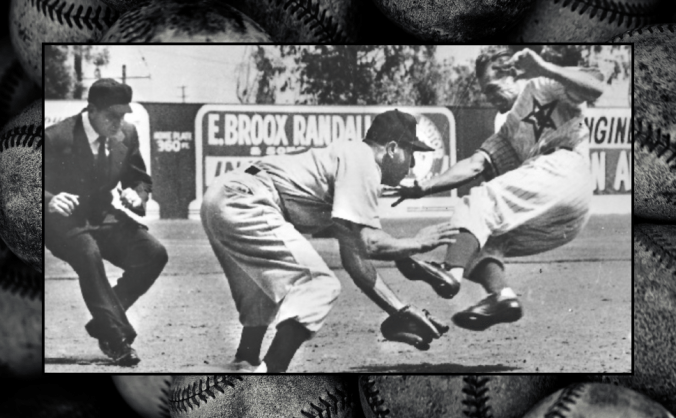
Umpires ejected both Beard and Franklin and forced all players not actually in the lineup to their respective locker rooms for the remainder of the game—which was the first of a Sunday doubleheader. Police riot squads arrived as the game continued and set themselves up in the dugouts to ensure the second game went on without incidents.
Regionality in Baseball
Despite some great teams and a fantastic rivalry in Los Angeles, people clamored for major league ball. They got it on TV by this point and wanted it up close. The PCL was no longer drawing in crowds. But its earlier success and a fanbase hungry for baseball became the downfall of the league.
Baseball has always been regional. It may be because teams play series of games against each other rather than single games like the other major American sports. That means teams’ schedules have to be planned out more strategically. You get long home stretches and long periods of travel.
This is why each baseball league was originally so regional. Before plane travel was the norm, it was bus or train to get around. The original teams of the National League in 1876 represented Boston, New York, Hartford, Philadelphia, Louisville, St. Louis, Cincinnati, and Chicago.

In 1901, the American League launched with teams in roughly the same area: Boston, Chicago, Philadelphia, Baltimore, Cleveland, Detroit, Milwaukee, and Washington D.C. The American League was originally a minor league but was promoted to a major league due to its success and the first World Series between the two major leagues was held in 1903.
The MLB Comes West
With the major leagues representing the east coast, it’s easy to see why the PCL, while a minor league, was sometimes considered and hailed as a third major league. The fans certainly didn’t feel like they were getting inferior talent by watching PCL games. But in the 50s, Major League Baseball was looking to expand and in seeing what was happening with the PCL in California, that was the state they had their eyes on.
Two teams would come to California, the Giants to San Francisco and the Dodgers to Los Angeles, the two most successful markets in the nearly six decades of the PCL. With two major league teams in these areas, the PCL teams would have to go.
The Stars Say Goodbye
The owners of the Hollywood Stars had no interest in playing anywhere else and decided to sell the franchise. The new owner was based in Salt Lake City and the Salt Lake City Bees were reborn. Fitting since the original Bees left Salt Lake City to become the first iteration of the Stars in 1926.
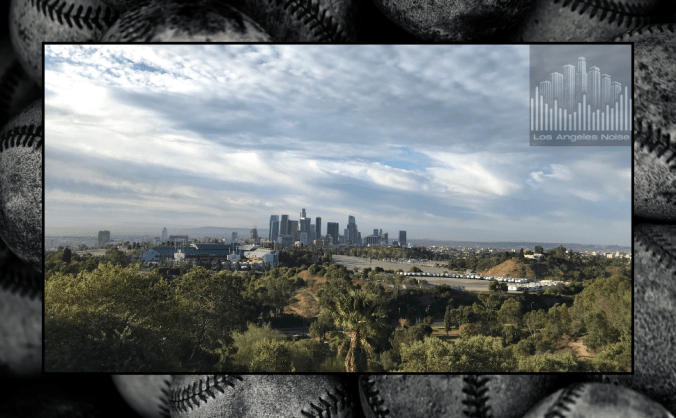
The Angels Are Reborn in the MLB
The Angels franchise ditched the name and relocated to Spokane, Washington. Today, they are the Chihuahuas of El Paso.
In December of 1960, just four months before the baseball season began, Gene Autry purchased the rights to the Angels and he and his business partners moved at a furious pace to be ready for the 1961 season in April.
The Los Angeles Angels were reborn but would not remain in the city for long. The new Angels played a year at Wrigley and four at Dodger Stadium. During their time at Dodger Stadium, the Angels referred to it as Chavez Ravine and the name stuck.
[For more on Dodger Stadium’s history, you can check out my article on that topic here]
After four seasons playing at someone else’s home stadium, Autry jumped at the opportunity to give his team their own home. The Angels moved to Anaheim and became the California Angels.
After a few name changes, including the very awkward “Los Angeles Angels of Anaheim,” the team eventually went back to claiming Los Angeles in the American League despite playing one county over.
The Stadiums Fade Into Memory
Los Angeles has always been too happy to erase its past in favor of a new vision with little regard for who or what they remove. This would be the case with the stadiums that hosted the best and rowdiest rivalry in the PCL.
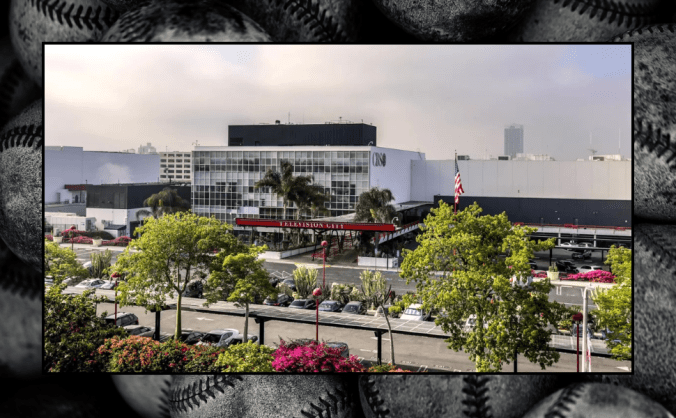
Gilmore Field was purchased by CBS and in 1958, the stadium was torn down. The city’s love for baseball had turned its attention to the Dodgers. Gilmore Field disappeared with little to no coverage to make way for the CBS Television City complex.
As for west coast Wrigley Field, Dodgers owner Walter O’Malley purchased the stadium and the Angels franchise in 1957 prior to announcing the Dodgers would come to Los Angeles. Despite the purchase, he never intended for the Dodgers to play there. Instead, O’Malley traded the land to the city of Los Angeles for the land where Dodger Stadium now stands.
In 1961, Wrigley Field hosted its first regular-season major league game for the inaugural season of the new Los Angeles Angels of the American League. Once the jewel of baseball stadiums, Wrigley Field was now outdated and called an “obsolete concrete shack” by Mel Durslag of The Sporting News.
In 1969, Wrigley Field was demolished. In its place, the city put up the Gilbert Lindsay Recreation Center. The little-league baseball diamond is known as Wrigley Field now and a plaque commemorates the old home of the Los Angeles Angels of the PCL.

Last Words on the PCL
The 2023-24 baseball season ended with an ocean of blue flooding the streets of downtown Los Angeles. The Dodgers remain one of the favorites for the 2025 season but in the grind of baseball, you have to play through it to see who can survive and win it all.
In the PCL, the Angels saw the most success, winning a total of 15 pennants in seasons that sometimes reached 200 games. The Hollywood Stars didn’t win as many pennants but cultivated a loyal following that included celebrities as a precursor to the front seats and luxury boxes at Dodger games. As for the Tigers, they make you wonder if there is another reality where Vernon became a different kind of city.
For nearly six decades, the Pacific Coast League found success in Los Angeles. People filled a different Wrigley Field, threw their hats in the air to celebrate, and bought plenty of peanuts and Cracker Jack.
In the end, the PCL proved to be the use case that showed Major League Baseball it could expand west. Today, only a select few know about the PCL but thankfully, baseball has always been a teaching sport. Baseball is passed down through stories and the story of the PCL is one worth telling.
 Los Angeles Noise