As I began listening to Saviors — Green Day‘s latest album — I was instantly reminded why this band has meant so much over my life. I decided then to run their discography and revisit my thoughts and feelings on a band that’s meant so much and survived over three decades.
I found Dookie as a freshman in high school, probably when I needed it most. American Idiot and 21st Century Breakdown served as the soundtrack for two major personal losses. My own growth from outcast teenager to husband, father, and reluctant adult, is permanently connected to this band.
After catching them live again this year and going through their entire discography, I break down their musical journey into three sections: Dookie, American Idiot, and post-Idiot.
Green Day: The Dookie Era
“Welcome to Paradise” punched me in the face when I was 14. The song was one of four singles off Green Day’s third album, first major label release, and their breakout record: Dookie. As a teenager with no clue where life was going, each of their singles hit harder than the one before, and a musical obsession began.
But the Dookie era doesn’t actually start here. It’s just the right record to associate with Green Day as a young band pouring out its soul and sharing all of its teenage angst while slowly growing up before our eyes.
1,039 / Smoothed Out Slappy Hours (1991)
Okay, 1,039 / Smoothed Out Slappy Hours is not the band’s first album. That would be 39/Smooth. However, that album was only put out on vinyl. Their first CD album is a compilation of 39/Smooth and two shorter projects: 1,000 Hours, and Slappy. Hence, 1,039 / Smoothed Out Slappy Hours.
Bands don’t always have their signature voice when you hear their first album. If you listen to Radiohead’s debut, Pablo Honey, you’ll find it stands alone within their catalog. If you remove “Creep,” you may not even know it’s them. And then there’s Green Day.
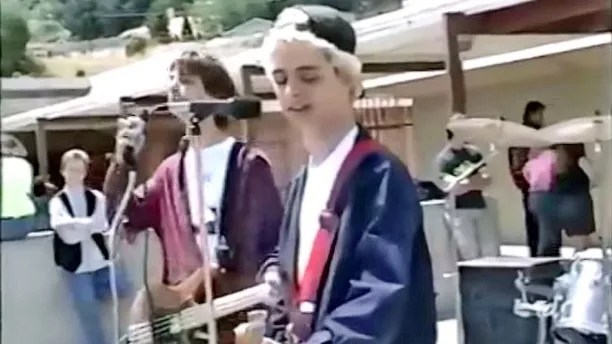
When you listen, it’s all there, though still evolving. Billie Joe Armstrong’s voice is exciting, disinterested, and depressed all at the same time with the ability to project a generation’s problems in simple lines. Mike Dirnt shouts backup vocals much like a hip-hop hype man in between Armstrong’s lines, power chords, and his own snappy bass licks. The drums are fast and punchy but still evolving and missing something — or someone.
Even their ability to pick the starting track to set the tone was there. “At the Library” kicks off with a fury and a guitar riff so good they’ll revisit it on Insomniac. Other standouts include “I Was There,” “Green Day,” and “The Judge’s Daughter.”
Kerplunk (1991)
Kerplunk is the first album with the trio we know now to be Green Day. John Kiffmeyer was Green Day’s original drummer, the one we hear on 1,039/Smooth… After that album and as the band was getting ready to record Kerplunk, Kiffmeyer decided to step away to pursue his education. Enter Tré Cool.
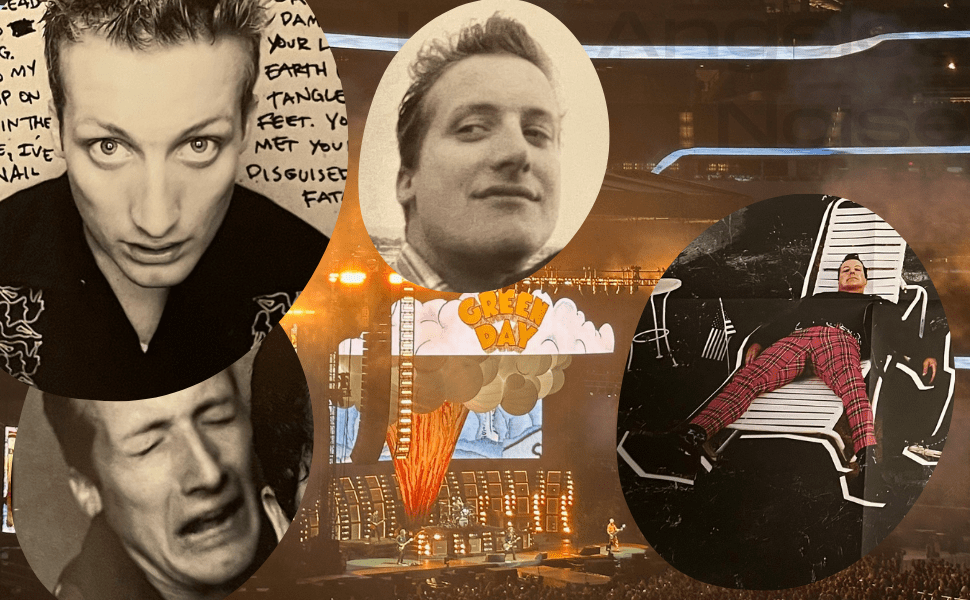
Who Is Tré?
Frank Edwin Wright III was the drummer for the Lookouts, the band Lookout Records’ owner Larry Livermore formed a few years before. Livermore gave each band member a nickname and Frank became Tré Cool. When Kiffmeyer stepped away, Tré was ready to step in and give Green Day that last piece of the puzzle.
Despite coming up as a punk rock drummer, Tré brought with him a drumming style that adjusted to the music. He was looking for the drums to complement the music rather than fight for a place in the songs. The mentality was similar to that of Ringo Starr of the Beatles, who repeatedly said he didn’t look to embellish much but rather play within the structure of the songs.
Songs of Kerplunk
This is when everything about Green Day truly comes into focus. You can listen to Kerplunk on its own and get just about all the things that make this band.
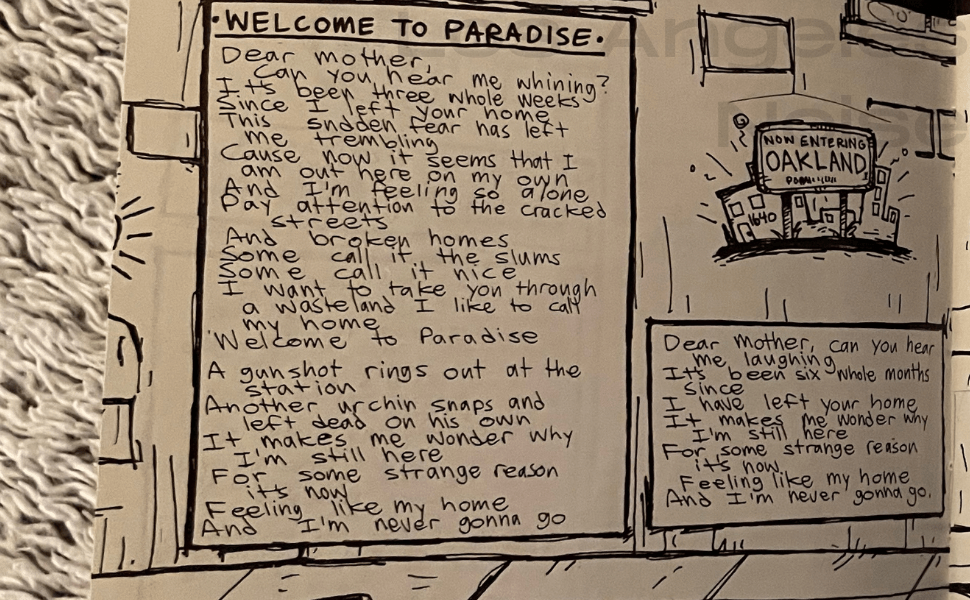
One thing you can’t overlook with Kerplunk is that it includes a version of “Welcome to Paradise.” While similar, it’s noticeably different from the single off Dookie.
This version of “Paradise” is slightly grittier, one you’d happily play on a bad cassette player in a 1979 Chevrolet Chevette (or was that just me?). It also leans a bit heavier into the surf rock influences of the band, especially when the solo comes around.
Kerplunk closes with a rendition of The Who’s “My Generation” that still holds up. It opens with the track “2,000 Light Years Away,” a loud and fast preview of what was to come.
“Christie Rd.” is a slower song and an early example of Armstrong longing for an earlier, simpler time and forcing listeners to find their own happy place of the past. Your place is different from mine and certainly from Armstrong’s but he has an uncanny ability to make you recall those places simultaneously. This theme is present in every single album to this day.

Meanwhile, “Dominated Love Slave” explores sexuality with a childish sense of humor that makes you smile and perhaps audibly chuckle each time it comes on. Sexuality, fetishism, and gender identity, are explored heavily throughout the first era of the band. The band’s humor kept the feel from getting too heavy.
Overall, Kerplunk shines as the true first full-length album by a pop-punk rock band on the rise but still firmly placed within its northern California punk scene. What followed was their debut to the rest of the music world.
Dookie (1994)
Dookie is Green Day’s major-label debut album. With a band that focuses so much on a constant feeling of loss and the inability to find that happiness again, you can’t talk about this album without first talking about the consequences Armstrong, Dirnt, and Tré faced after ditching their indie label.
“Selling Out” and Leaving Home
In today’s music landscape, where musicians seemingly build their brand on social media before putting out any music, the concept of selling out now seems foreign. But in the 90s, music fans, and rock fans in particular, had this obsession with independent labels and keeping groups small and to themselves.

When you were independent and local, you were seen as making music for the love of it. You were a local hero for resisting the music business.
You made little to no money. You performed in backyards, warehouses, tiny clubs, wherever. And of course, you traveled in a beat-up van to get to those shows. But if you dared to sign with a major label hoping to stop living like starving artists, the same fans who loved you turned their backs on you immediately.
Touring is grueling. Green Day took an old bookmobile and used that as their tour van. Along for the ride was Aaron Cometbus. Before Tré joined for good, Aaron played drums for the band a few times and was also their roadie. He also wrote a punk-rock magazine recounting the scene and his own adventures.
On the podcast, 60 Songs that Explain the 90s, host Rob Harvilla recounts some of Aaron’s diary of the earliest Green Day tours:
“Touring is pulling into town at 4AM and finding mattresses in the mattress factory dumpster, and setting up camp behind the Denny’s parking lot and waking up at high noon feeling like complete shit.”
— Aaron Cometbus
But that was touring. Certainly their local scene was better. Well, it was — until it wasn’t. In the book “Sellout,” author Dan Ozzi details their transition from indie punk-rock darlings to outcasts once again.
Green Day’s local scene was Berkeley, California. Its center was 924 Gilman Street. This is where Green Day played most often and where they became local rock heroes. 924 Gilman was an all-ages punk club that was seen as a safe space for punk fans, most of whom didn’t fit in at school and other places. To them, 924 Gilman welcomed them and accepted them as they were.
Kiffmeyer had an in at 924 Gilman because he was also the drummer for the club’s house band, Isocracy. Green Day’s first Gilman show was in 1988 as Sweet Children, their original name. Their first Gilman show as Green Day came in 1989, opening for the highly influential Operation Ivy on what would turn out to be their last official show as a band.

The reason 924 Gilman felt like such a safe space was the intolerance for the physical abuse previously associated with punk. The rules of the establishment were spray-painted on the wall for all to see: NO racism, NO sexism, NO homophobia, NO alcohol, NO drugs, NO fighting, NO stagediving.
After Green Day left Lookout Records in favor of Warner Brothers affiliate, Reprise Records, one more line was added to the wall at 924 Gilman: NO major-label bands. Green Day played their last show there on September 3, 1993.
The song “86” was inspired by their Gilman ban and in an interview with Spin, Armstrong went on to say, “We’ve played in front of 20,000, 30,000 people, and I still haven’t felt the same thing that I felt playing in that place.”
No Looking Back Now
The decision was made. Green Day signed with Reprise and went into Fantasy Studios in Berkeley with producer Rob Cavallo to record a new album. Dookie was released February 1st, 1994, and blasted Green Day into rock stardom selling 20 million copies worldwide and dropping five singles:
- “Longview”
- “Basket Case”
- “Welcome to Paradise”
- “When I Come Around”
- “She”
In true Green Day fashion, track one sets the tone. “Burnout” opens with frantic snare hits evoking the speed of life and is paired with lyrics that speak to so many teenagers then and now:
“I declare I don’t care no more / I’m burning up and out and growing bored / In my smoked out boring room / My hair is shagging in my eyes / Dragging my feet to hit the street tonight / To drive along these shit town lights // I’m not growing up. I’m just burning out! / And I’ve stepped in line to walk amongst the dead.”
Hopelessness is found throughout the record but one thing that always surfaces is the desire to continue going through it. “Having a Blast” is an indication of that:
“Well, no one here is getting out alive / This time I’ve really lost my mind and I don’t care / So close your eyes and kiss yourself goodbye / And think about the times we’ve spent and what they’ve meant // To me it’s nothin'”
You can again hear both the hopelessness and acceptance on “Welcome to Paradise,” where Armstrong begins unhappy that he’s living in a rundown apartment. By the end of the song, he’s ecstatic with his situation and revels in the freedom of the place.
The main takeaway from Dookie is that life may suck at times, but it’s worth sticking around. And perhaps that little glimmer of hope, or at least acceptance of life’s moments of misery, is exactly what we needed in 1994.
Insomniac (1995)
When a band hits it big, there’s a lot of attention on the follow-up record. With Insomniac, Green Day turned up the anger, disillusion, and noise, while remaining true to themselves. They also took off a little of that polish of the Dookie sound for a record a bit more reminiscent of Kerplunk.
Insomniac also brought to light Green Day’s song transitions. “Brain Stew” was the last of three singles from Insomniac but if you had the album, that song by itself always felt incomplete. Listening to “Brain Stew” on the radio and hearing it end was like playing a scale on a piano and stopping at the seventh note.

“Brain Stew” doesn’t actually end — it flows seamlessly into “Jaded.” Together, they form one whole song that starts with a release of pent-up frustration and resolves to a simple acceptance that all you can do is move through life and find your “place in nowhere.”
Green Day blended songs before and even did it with a single on Dookie, where “Chump” transitions into “Longview.” The difference is “Longview” is the resolution piece, so starting from the middle still gives you the satisfaction of a conclusion at the end of the song.
Lyrically, Insomniac brings full teenage attitude and anger with it. Armstrong calls himself his own worst friend and perfect enemy on “Armatage Shanks.” In an anthem for entitled white youth everywhere, he claims to be waiting for his parents to die so he can cash in. And in “Geek Stink Breath,” Armstrong invites us into what he sees in the mirror while battling a meth addiction.
“I made my decision / To lead a path of self-destruction / A slow progression killing my complexion / And it’s rotting out my teeth // I’m on a roll / No self-control / I’m blowing off steam with methamphetamine / I don’t know what I want / And that’s all that I’ve got / And I’m picking scabs off my face.”
But it’s “Panic Song” that always stands out on this album lyrically. And that’s perhaps because when the song begins, you even wonder if it’s going to say anything at all.
The song starts with only a fast bass line, then the drums kick in. Slowly, the guitar comes in and once all three are present, things start to pick up, as if trying to catch up to the speed of Dirnt’s bass. The tension builds and it’s not until after one minute and 57 seconds that Armstrong finally speaks these lines:
“Ready for a cheap escape / On the brink of self-destruction / Widespread panic / Broken glass inside my head / Bleeding down these thoughts of anguish / Mass confusion // Well, the world is a sick machine / Breeding a mass of shit / With such a desolate conclusion / fill the void with I don’t care.”
It’s this combination of intensity and honest frustration that puts Insomniac above Dookie. The band sort of had to soften itself and comb its hair to break out but it’s Insomniac that showed everyone what people first saw back in Berkeley.
Nimrod (1997)
A lot had changed by late 1997. Death was all around the music industry after losing Kurt Cobain, Tupac Shakur, Bradley Nowell, and many more. Alternative radio had moved away from the darkness of grunge and punk to embrace the safety of Britpop.
On October 14, 1997, Green Day released Nimrod. This could’ve easily been the beginning of the end for the band. Instead, thanks in large part to the album’s second single, they kept growing.
“Good Riddance,” AKA, “Time of Your Life,” was slower than any single that preceded it and took a more positive outlook on life. The song was originally recorded during the Dookie sessions but the band agreed it didn’t fit musically on that album. They found its place as the second-to-last track of Nimrod.

Beginning with the positive side, the song was an instant hit. To this day, it remains their closing song live with good reason.
It is a farewell song that speaks to the experiences of the listener instead of focusing on Armstrong’s own life. It urges the listener to push through both the joy and misery of life, and simply enjoy the journey.
“So take the photographs and still frames in your mind / Hang it on a shelf in good health and good time / Tattoos of memories, and dead skin on trial / For what it’s worth, it was worth all the while // It’s something unpredictable / But in the end, it’s right / I hope you had the time of your life.”
But not all was great with this song leading the way in 1997. In perhaps its most commercial moment, the song was featured in the Seinfeld 1998 series finale. Along with the backlash on the Seinfeld finale itself, came some backlash for the band.
For starters, the “sellout” term reappeared as those who abandoned the band back when they signed with Reprise looked to this moment to further support their argument. Some fans who had stuck around bailed here, feeling like this was the moment the band fully embraced the commercial side of music.
And then there were the people who only found Green Day when this song hit the radio top 40 stations. Because this was still the 90s, they went out and purchased the album on CD hoping to find more music like “Good Riddance.” Instead they were introduced to Green Day’s loud guitars, fast drums, and lyrics like:
- “Pressure cooker, pick my brain and tell me I’m insane / I’m so fucking happy I could cry.”
- “I was a young boy that had big plans / Now I’m just another shitty old man / I don’t have fun and I hate everything / The world owes me, so fuck you!”
- “I fucked up again, it’s all my fault / So turn me around and face the wall / And read me my rights and tell me I am wrong until it gets into my thick skull.”
These three groups missed out on gems like “Redundant,” “Walking Alone,” and “Scattered.” They failed to grasp the beauty of Nimrod was in its duality. The album gave you the quirky, egotistic, funny, and angry Green Day with flashes of a trio growing up and evolving.
Lyrically, Armstrong was beginning to look differently at life and was better able to go deeper inward. And musically, they began to explore and experiment. Nimrod looks to metal in songs like “Take Back” while “King for a Day” adds ska-inspired horns. And “Last Ride In” is a groovy instrumental track you could listen to on a lazy beach day.
When you look back, Nimrod is the album that showed the trio was not satisfied with being the guys from 924 Gilman forever. As Dirnt later said: “We’ve got to keep it interesting for ourselves, too. If you get bored or if you stop growing, you die.”
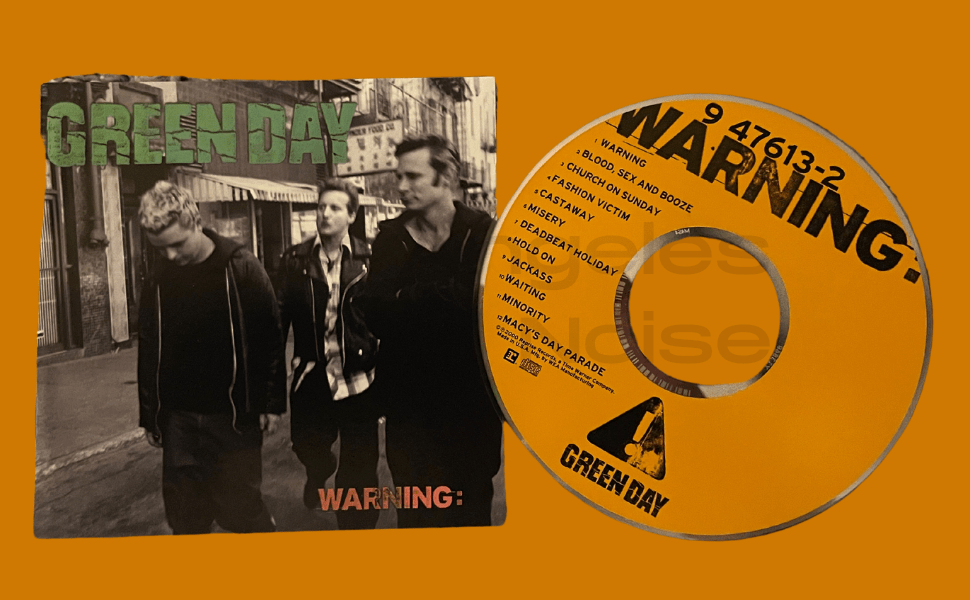
Warning (2000)
That growing phase is what ultimately brought the final album of the Dookie era. The 90s were now in the past. We partied like it was 1999 and survived Y2K. And Green Day brought us a public service announcement in Warning.
“Blood, Sex and Booze” is the band’s last, and best, song truly centered on sexual fetishes. It’s the story of a few sessions with Mistress Kill and takes you right into the scene so that you can experience it. By comparison, Kerplunk‘s “Dominated Love Slave” is like a virgin teenage boy singing about nipple clamps.
From lust, we jump to love on “Church on Sunday.” Here, Billie Joe professes, “If I promise go to church on Sunday / Will you go with me on Friday night? / If you live with me, I’ll die for you and this compromise.” Of course, this compromise is not quite equal. It’s this idea that we’re prepared to give up a major portion of ourselves to be with that special person, if only for a moment.

On the back half of the album, “Waiting” is possibly the most positive song Green Day had written to this moment. Other pensive songs include “Castaway,” “Hold On,” and one of my personal favorites, “Macy’s Day Parade.”
“When I was a kid I thought / I wanted all the things that I haven’t got / Oh, but I learned the hardest way / Then I realized what it took / To tell the difference between thieves and crooks / Lesson learned to me and you // Give me something that I need / Satisfaction guaranteed / ‘Cause I’m thinking ’bout a brand new hope / The one I’ve never known / ‘Cause now I know it’s all that I wanted.”
And while Warning marks the end of an era, it also gives us a glimpse of what’s to come. Later, some critics took to talking about Green Day as a suddenly political band. But when you listen to Warning in its entirety, you realize something was already brewing.
With Green Day, it’s not quite political as it is social. It’s commentary on what is clearly going on around you that you didn’t see in your younger days. “Minority” rails against authoritarianism. The title track calls out various social restrictions to ask if they are really there to protect the people or if they serve other functions. And “Fashion Victim” talks on the price it costs each of us to find success.
Warning is a mostly forgotten album but it was and still is my favorite for its growth, honesty, and humanity. It marked a point of growth from where they began but also signaled a major shift.

From this point on, Green Day was no longer that fun bunch covered in mud with neon hair trying to piss off parents and the olds in general. They were becoming something else, something we desperately needed in the 2000s.
Green Day: The Idiot Era
It’s September 2004. I’m a young father with no clue where my life is heading. My aunt, who’s more like a second mother, passes away after a long battle with cancer. I don’t know it yet but her oldest son will also pass five years later on the same month to permanently forge my emotional connection to Green Day’s music. September is indeed a month I wish I could sleep through.
It’s also the three-year anniversary of the fall of the Twin Towers. Since the 9/11 attacks, the U.S. government has gone to war against Afghanistan and Iraq, dramatically slashed taxes on the wealthy, implemented various abortion regulations, and circumvented several civil freedoms in the name of national security.
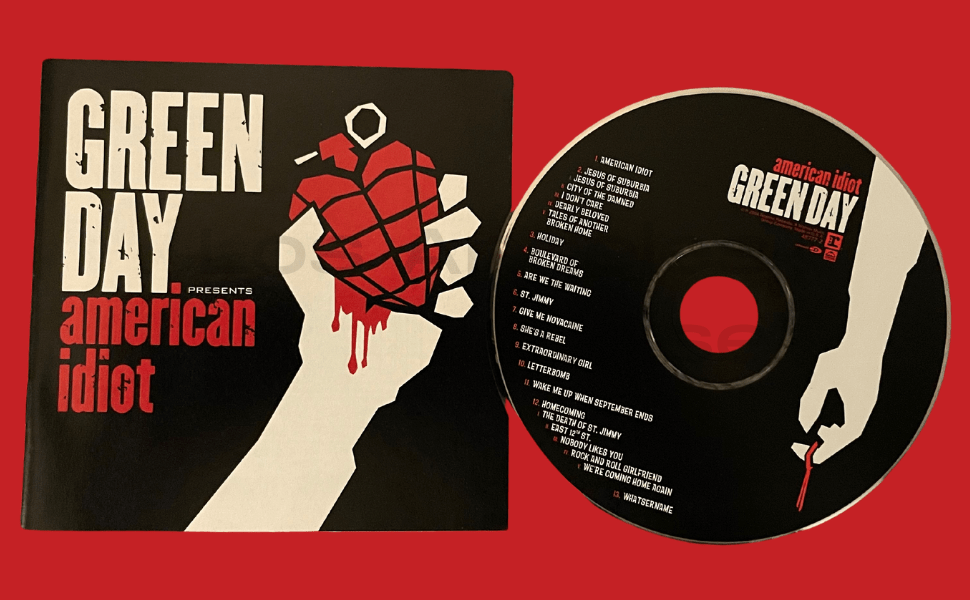
And in the midst of all this, Green Day releases the album that nobody is expecting. The album that becomes the single screaming voice of teenagers and 20-somethings across the U.S. fed up with the direction of the nation.
American Idiot (2004)
This is a new Green Day. Gone are the neon hair and extra bright colors of the Dookie era. The trio now in black suits, jet-black hair, and blood-red ties to match the dark tones of the album.
Green Day’s music always included darkness, just never like this. American Idiot is a bleak outlook on where the country, or the world, was heading. It’s a rock opera set in a dystopian tomorrow and focused on loss. It’s a rock record for sure but it’s filled with mourning.
As usual, the leading song sets the tone and in this case, it’s the rock anthem of the year. “American Idiot” shouts the feelings so many have in 2004 as the country moves (and continues to move today) so far right:
“I’m not a part of a redneck agenda / Now everybody, do the propaganda / And sing along to the age of paranoia.”
Immediately after the title track, you get the epitome of the transitions Green Day had practiced on every album before. “Jesus of Suburbia” is a 9-minute story made up of 5 discrete musical sections — movements — that seamlessly weave from one to the next. It’s nine minutes of anger, pain, disappointment, and sorrow that introduce us to the young couple at the center of the album’s story.
A rock opera is never an easy sell for a major label. Producer Rob Cavallo remembers not having an easy time when the album was getting recorded:
“American Idiot was such a difficult album to explain to people before it came out. I would be talking about things like nine-minute songs and the response from Warner Brothers was, ‘Okay, they’ve finally lost their fucking minds.’”
— Rob Cavallo
This album didn’t come easy. In fact, it almost didn’t happen. The band previously worked on an album titled Cigarettes and Valentines until the master tapes went missing or Cavallo made them go missing, depending on what story you choose to believe. Today, everyone admits the songs for that album were far from the band’s best work and were recorded by three guys on the verge of calling it quits.
It was at this point that Billie, Mike, and Tré came together to discuss their future and decided something had to change if they were to stay together. The biggest change revolved around songwriting. Prior to this moment, Armstrong was the leading creative force behind the music. Many times, the other members wouldn’t hear the songs until Armstrong believed they were just right.
The new approach included each member recording 30-second musical ideas on their own and coming together weekly to share them with the others. It’s this new approach that ultimately led to songs like Jesus of Suburbia and Homecoming. The album relied on the input of all three members of the group in a way no album before it had done.

The result of the new approach, the dedication to possibly go out with a bang, and the serendipitous timing was the band’s biggest hit since Dookie.
“American Idiot” is a massive hit and political statement. “Jesus of Suburbia” becomes a hit single at nine minutes that, dare I say, speaks to fans much like “Bohemian Rhapsody” did in 1975. And songs like “Boulevard of Broken Dreams,” “Wake Me up When September Ends,” and “Give Me Novacaine” pull your heartstrings to their breaking points.
Then came the awards. Here are some of the accolades the album nabbed:
- 6x Platinum
- 7 Grammy nominations
- Grammy for Best Rock Album and Record of the Year
- 7 MTV Music Video awards
- 2 American Music Awards: Pop/Rock Album and Alternative Artist
With American Idiot, Green Day achieved a comeback and renaissance. After Warning‘s rejection, they were once again on top of the alternative charts. They replaced their bratty teen image with that of a band looking to change the world through its music.
But with their success, came a certain pressure. When the tour ended, the question was, what will they do next to top it?
21st Century Breakdown (2009)
After Dookie, Green Day turned up the volume and the anger on Insomniac. While both of those albums were produced by Rob Cavallo, the change in sound is similar to when Nirvana turned to Steve Albini’s grittier sound for In Utero after the success of the Butch Vig-produced Nevermind.
Ironically, Green Day turned to Vig for 21st Century Breakdown after working with Cavallo on every album since signing with Reprise. Vig is great at what he does and perhaps this was Green Day’s way of looking to create something different. Unfortunately, the album fails to separate itself from American Idiot.

Like Idiot, it’s a rock opera telling the story of a young couple. This time it’s Christian and Gloria in a country at war in a not-so-distant future. It is by all accounts, American Idiot, Part 2.
On its own, 21st Century Breakdown was not a bad album. It included solid songs like the title track, “¡Viva La Gloria!,” “Before the Lobotomy,” and “Last Night on Earth.”
Trouble is that even good songs reach out to the album before. “Know Your Enemy” is much like “American Idiot” and while a personal favorite that always draws tears, “21 Guns” is much like “Novacaine” or “September.”
In addition to it feeling like a replica, it also suffered from a failure to hold some music back. The full record comes in at 70 minutes with a total of 18 songs. Granted, it started with 45 songs according to Armstrong. Still, the record could’ve used some more cuts to push it back to the 45-minute sweet spot of previous Green Day albums.

Cutting it that far means some of the story elements of the album would get lost. But if done correctly, the audience would also fill in the blanks to even create their own story. And if not, the music would stand on its own without an all-enveloping story.
And so, despite having some great songs in a period of creativity for Armstrong in particular, 21st Century Breakdown comes off bland and repetitive. Instead of trying something new, the band found itself recreating what could not be.
¡Uno!, ¡Dos!, ¡Tré! (2012)
21st Century Breakdown was far from a flop. The album did well but it certainly didn’t duplicate American Idiot‘s success. After two rock operas, the grandiosity bug must’ve worked its way out of Green Day’s system, right? Wrong.
I don’t recall where I was when I heard it but some time in 2011 or early 2012, I heard the guys were working on a triple album. If your way of topping a 1-hour rock opera is a second, longer rock opera, how do you then top that? I guess with a triple album totaling 128 minutes of music.

But this wasn’t really a triple album. Remember that while we’re at the tail end of the CD era, plenty of people were still buying CDs in 2012. At perhaps the peak of the band’s hubris, this project is made up of three separate albums released one month apart.
Whether it was them, the record label, or both, they expected fans to shell out money for three albums over three months. Those expectations proved wrong.
¡Uno! was received with anticipation by the most faithful fans. Released September 21, 2012, it’s the best-selling of the three discs with 330k copies in the U.S. and just over 1 million globally. It went downhill from there. Neither ¡Dos! nor ¡Tré! reached 200k in U.S. sales. Together, the ¡Uno, Dos, Tré! project comes in at 690k copies sold in the United States.

The band’s personal situation didn’t help the albums, either. Just one week before ¡Uno’s! release, Billie checked into rehab for substance abuse. The tour scheduled to start in September didn’t begin until March of the following year. ¡Dos! dropped in November 2012 and ¡Tre! was in CD racks in December. Radio had already moved on from all three albums by the time the tour began, as had most music fans.
Much like Breakdown, this project would’ve benefited from healthy cuts. At just under four minutes, “99 Revolutions” (¡Tre!) is inexplicably repetitive. “Lady Cobra” (¡Dos!) sounds almost exactly like the White Stripe’s “Fell in Love with a Girl.” Several other songs sound uninspired or far too close to the songs that inspired them. Cutting down the 37 songs of the three albums to get under 60 minutes could’ve made for a retro-Green Day album reminiscent of their pre-opera work.
American Idiot was a major hit with music that remains relevant today and still packs a loud yet somber punch. With 21st Century Breakdown and ¡Uno, Dos, Tre!, the band bought into its own hype and confused quantity for quality.
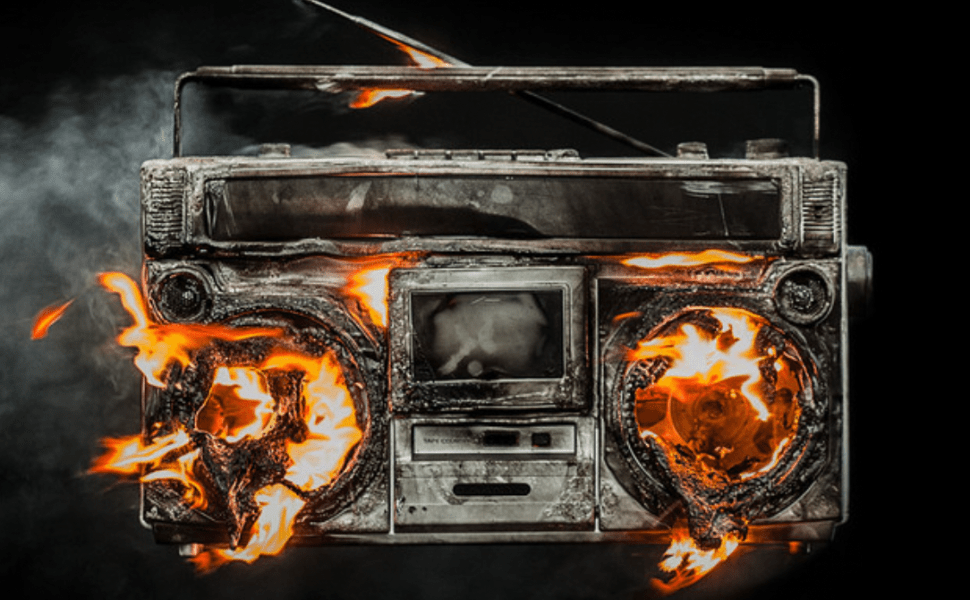
Green Day: The Post-Idiot Era
If rock is about rebelling against the norm, there comes a moment in a successful band’s career when they must rebel against their biggest hit. That’s not to say they must hate their hit like Nirvana and “Smells Like Teen Spirit” or Radiohead with “Creep.”
The post-Idiot era marks the time Green Day stopped looking to recreate the magic of American Idiot. They finally ditched the concept albums and went back to their pop-punk origins, just with more years of experience from which to draw inspiration.
Revolution Radio (2016)
“I’m running late to somewhere now / That I don’t want to be / Where the future and promises / Ain’t what it used to be”
These are the lines that open Revolution Radio. American Idiot opened with a bullet while this album begins with 20 seconds of a slow guitar before Armstrong sings those lines.
“Somewhere Now,” the first track on Revolution Radio speaks to fighting against a dull existence while accepting that life continues and we eventually reach adulthood even if dragged into it. And it’s with that realization that we meet the Green Day we’ve all been waiting for.
“Bang Bang” and “Revolution Radio” are powered by the band’s signature brand of punk. “Say Goodbye” then follows harkening back to the Idiot and Breakdown projects without diving into that space completely.
Back to form with a 45-minute running time, Revolution Radio hit number one on the Billboard chart on its first week. It turns out fans were still looking for Green Day, just a Green Day less focused on outdoing itself.
Father of All… (2020)
Timing is everything and Green Day certainly benefited in 2004. In 2020, they were given a harsh reminder of it. Father of All Motherfuckers stands as a complete antithesis to American Idiot.

At only 26 blisteringly fast minutes, the album throws ten songs at your face — most of them not even three minutes long. It’s over before you realize it and leaves you yearning for more.
The album artwork is a middle finger to American Idiot: A vandalized closeup of the Idiot album cover. It’s a beautiful statement of punk rock in its purest form and screams, “Fuck a concept record!”
And as the polar opposite of American Idiot, Father of All was released at exactly the wrong time. The album came out February of 2020. Just weeks later, we’d all be sequestered at home wondering if we would ever leave again.
I still remember listening to Father of All multiple times sitting at my desk at home as the work-from-home transition began. With so much happening and so much uncertainty, the album came and went without much noise. It deserved better for sure but perhaps it was its fate. Without this final good bye to Idiot, we couldn’t have the next chapter.
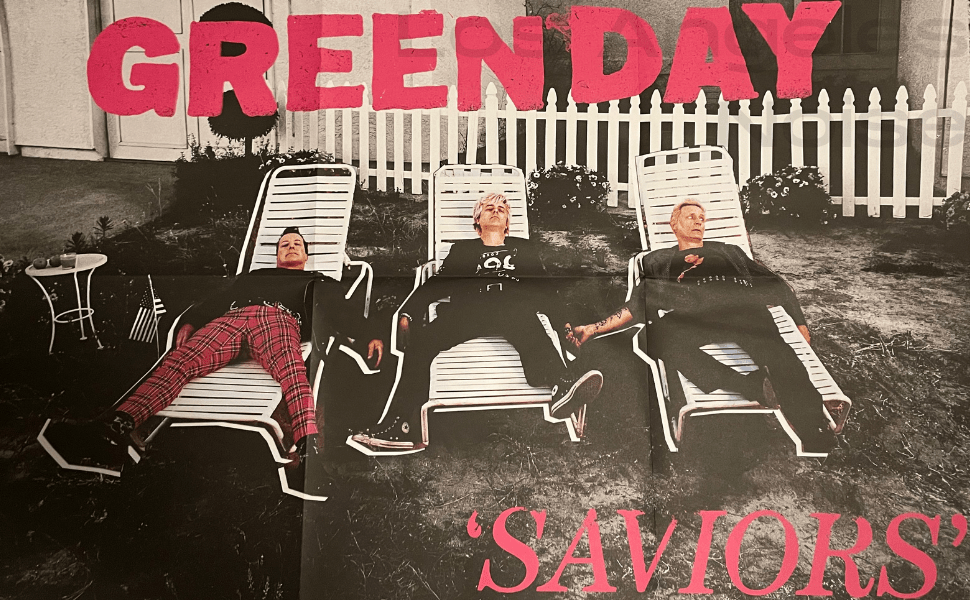
Saviors (2024)
And finally, we reach 2024. The year began with a new album and the announcement of a world tour where the band would play Dookie and American Idiot from beginning to end to mark the 30- and 20-year release anniversaries, respectively.
Certainly not turning their backs on their successes, the guys now in their 50s seem revitalized and determined to continue rocking out and rocking crowds. That confidence and energy led them to Saviors.
At 46 minutes, Saviors gives you exactly what you want from a trio that’s been through the ups and downs of life. They’ve survived this long and can compare scars with their fans. Armstrong makes a callout to their place in life that hits home on “Look Ma, No Brains!”:
“Well, I’m gone, gone, gone and I’m far away / Well, I lost my head and I’m here to say / Oh, mama, mama, mama ma, I’m all grown-up / Well, it’s too late now for my suicide.”
The album touches on all the usual Green Day topics: life’s monotony, socioeconomic issues, love, resistance to authority, addiction, and loss. It romanticizes our lost youth while accepting you can’t go back to those times. It forces all of us who grew up with the band to accept our own realities of aging and present times as they’ve accepted their own.
Saviors also re-introduces themes seemingly left behind in the Dookie era. “Bobby Sox” is a simple song about dating that plays with gender identity as Armstrong searches for a girlfriend, boyfriend, and best friend.
“Living in the 20s” uses the band’s classic humor to show some of the shortcomings of being adults in this decade.
“I got a buzz like a murder hornet / I drink my media and turn it into vomit / I got a robot and I’m fucking it senseless / It comes with batteries and only speaks in English // Congratulations, best of luck and blessings / We’re all together and we’re living in the ’20s / Salutations on another era / My condolences / Ain’t that a kick in the head?”
It’s possible that Saviors accomplishes something inherently difficult in music. As a whole, the themes clearly call back to times that have passed. For adults, it’s nostalgic. However, songs like “Dilemma,” “The American Dream Is Killing Me,” and “Coma City” should resonate with younger rock fans.
After 35 years and 11 previous albums (counting the trilogy as a single project), Green Day put out a highly personal, adult record that excites fans across generations. It’s the album most like Warning back in 2000.
What Comes Next?
From here on out, Green Day could potentially tour on album anniversary milestones and we’ll all be right there for every opportunity to see them live again (Insomniac turns 30 in 2025). We’ll also take care of their new fans, introducing our own kids to the music that helped us get through life’s toughest moments.
None of us really know where Green Day will go from here but if Saviors stands as the last album they release, it’s a perfect finale. Much like the Beatles’ Abbey Road, it can be one beautiful, final return to what made the band great while embracing everything they learned and experienced in a journey that took them from 924 Gilman to 1001 Stadium Drive.
 Los Angeles Noise
Pingback: NAMM 2025: Time for the Annual Reunion of All Things Musical | Los Angeles Noise